
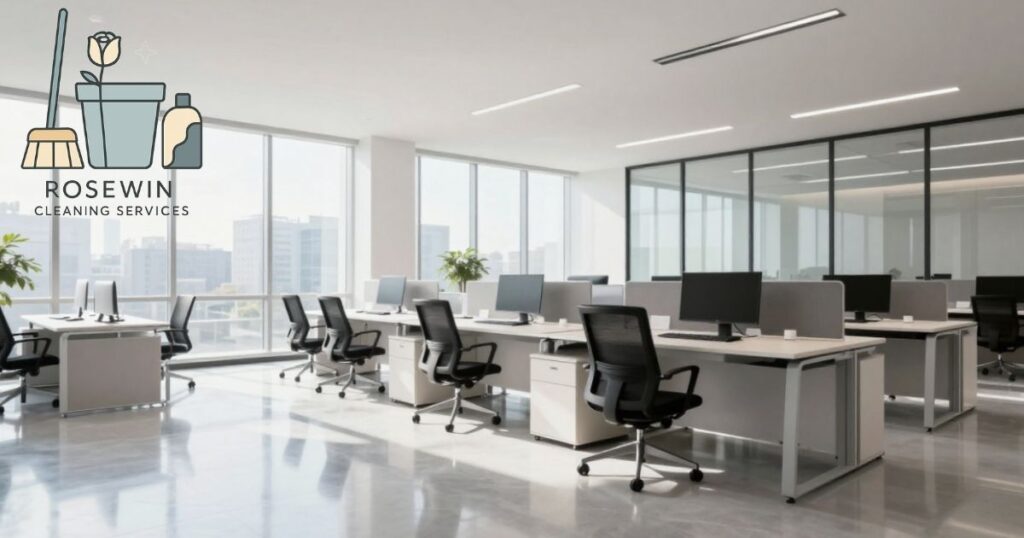
For Facility Managers, Operations Directors, and business owners looking for professional office cleaning, Milton Keynes presents a constant balancing act. You want a workspace that looks professional, protects your staff’s health, and aligns with your operational budget.
However, when putting together a facilities management plan or tendering for a new cleaning contractor, one of the most common questions that arises is: What is the actual difference between daily cleaning and deep cleaning, and do we really need both?
The short answer is yes. But to understand why, we need to look past the surface level. Relying solely on daily cleaning is like washing your car without changing the oil—eventually, the hidden buildup will cause a systemic problem. Conversely, ordering deep cleans without a daily maintenance strategy is a waste of your commercial budget.
Here is the ultimate guide to understanding the distinct roles of daily and deep cleaning, and how to structure a hygiene programme that protects your assets, your staff, and your bottom line.
1. What is Daily Commercial Cleaning?
Daily cleaning (sometimes referred to as regular or maintenance cleaning) is the foundational hygiene routine that keeps your business operational, presentable, and safe on a day-to-day basis.
The primary objective of daily cleaning is aesthetic upkeep and basic sanitation. It targets the most visible dirt, the most frequently used areas, and the highest-traffic zones. Without a daily routine, an office or clinic will quickly descend into a state that negatively impacts staff morale and leaves a poor impression on visiting clients.
Typical Daily Cleaning Tasks:
- Waste Management: Emptying all desk bins, kitchen receptacles, and recycling stations, and replacing liners.
- Surface Wiping: Wiping down communal desks, meeting room tables, and reception counters.
- High-Touch Point Sanitisation: Disinfecting door handles, lift buttons, light switches, and shared equipment like printers.
- Floor Maintenance: Vacuuming high-traffic carpeted areas (corridors, reception) and mopping hard floors in kitchens and washrooms.
- Washroom Upkeep: Sanitising toilets, sinks, and mirrors, and replenishing consumables such as soap, toilet rolls, and hand towels.
- Kitchen/Breakroom Maintenance: Wiping down countertops, loading or unloading the dishwasher, and cleaning the inside of microwaves.
The Role of Daily Cleaning in Your Business
Daily cleaning is your frontline defence against the spread of common workplace illnesses. In an office environment where hundreds of hands touch the same coffee machine or door handle, a rigorous daily sanitisation routine breaks the chain of infection. It ensures that when your staff arrive the next morning, they are walking into a fresh, reset environment that promotes productivity.
2. What is Commercial Deep Cleaning?
If daily cleaning is about maintenance, deep cleaning is about restoration. Commercial deep cleaning is an intensive, highly detailed process designed to remove ingrained dirt, bacteria, and allergens that accumulate over time in hard-to-reach or often-neglected areas.
Deep cleaning requires specialised equipment, stronger (yet safe and COSHH-compliant) chemicals, and significantly more time. It is not about a quick wipe-down; it is about physically extracting grime from the very fabric of your building.
Typical Deep Cleaning Tasks:
- Carpet and Upholstery Extraction: Using industrial hot-water extraction machines to pull deep-seated dirt, dust mites, and stains out of carpets and office chairs.
- High-Level Dusting: Cleaning the tops of tall cupboards, HVAC vents, ceiling fans, and light fixtures where dust quietly gathers and circulates.
- Behind and Beneath: Moving heavy furniture, filing cabinets, and kitchen appliances (like fridges and vending machines) to clean the hidden spaces beneath them.
- Intensive Washroom Descaling: Removing hard-water stains, uric-acid scale, and deeply embedded bacteria from grout lines, tiles, and porcelain fixtures.
- Window and Blind Detailing: Washing interior windows, thoroughly dusting or washing blinds, and cleaning window tracks.
- Floor Stripping and Polishing: For hard flooring, this involves stripping away the old, scratched protective layers and applying fresh sealants to restore the original shine.
The Role of Deep Cleaning in Your Business
Deep cleaning protects the capital investments within your facility. Commercial carpets and ergonomic office chairs are expensive. If dirt and grit are left embedded in the fibres, they act like sandpaper, wearing down the material every time someone walks on or sits on them. Scheduled deep cleaning actively extends the lifespan of your commercial assets, saving you thousands of pounds in premature replacement costs.
3. The Core Differences: A Quick Comparison
To help you build the right tender for your commercial space, here is a clear breakdown of how the two services differ:
| Feature | Daily Cleaning | Deep Cleaning |
| Primary Goal | Surface aesthetics and basic infection control. | Complete restoration and allergen removal. |
| Frequency | 1 to 7 days a week, depending on footfall. | 1 to 4 times a year, depending on industry. |
| Equipment Used | Standard commercial vacuums, mops, and microfibre cloths. | Carpet extractors, floor buffers, high-reach vacuums. |
| Time Investment | A few hours per shift, often outside office hours. | Can take a full day or weekend to complete. |
| Focus Areas | Eye-level surfaces, high-touch points, walkways. | Hidden areas, high ceilings, deep fabric fibres, grout. |
4. Why Your Space Needs Both: A Guide to Office Cleaning Milton Keynes
A common mistake made by businesses trying to cut overheads is relying solely on a light daily clean and never booking a deep clean. Alternatively, some businesses cut their daily cleaning down to once a week and assume a quarterly deep clean will make up for the shortfall. Both strategies eventually fail.
Here is why a combined approach is the only way to effectively manage a commercial facility:
1. The ROI of Office Hygiene
Poor workplace hygiene has a direct financial cost. The UK loses millions of working days each year due to minor illnesses such as norovirus, colds, and flu. Daily cleaning keeps the surface bacteria at bay, but if your HVAC vents are caked in dust and your carpets are holding onto allergens, your staff will continue to suffer from poor indoor air quality. A combination of daily sanitisation and periodic deep cleaning drastically reduces employee sick days, providing a measurable return on your cleaning investment.
2. The Psychology of a Clean Space
Your workspace is a physical representation of your brand. When a high-value client walks into your Louch Shacklock or Egniol office, they immediately judge your competence based on your environment. Daily cleaning keeps the reception tidy, but deep cleaning ensures there are no lingering odours in the carpets or unsightly scale build-up in the washrooms. A truly clean office signals professionalism, attention to detail, and a company that cares about its people.
3. Industry-Specific Compliance
Different sectors require different hygiene schedules.
- Corporate Offices: May only require a deep clean twice a year to address carpets and high-dust areas, alongside a 3-to-5-day daily cleaning schedule.
- Medical and Healthcare Clinics: Require stringent, CQC-compliant daily cleaning protocols with frequent, intensive deep cleans to manage cross-contamination risks.
- Warehouses and Logistics: Often need daily washroom and breakroom maintenance, with heavy-duty deep cleans focused on industrial floor degreasing.
5. Security, Safety, and Choosing the Right Contractor
When you hire a contractor to execute either daily or deep cleaning, you are handing over the keys to your livelihood. The cleaning industry in the UK is largely unregulated, which means Facility Managers must be incredibly rigorous when vetting their partners.
Enhanced DBS Checks
Whether a cleaner is emptying bins at 6:00 PM on a Tuesday or shampooing carpets on a Sunday afternoon, they have unsupervised access to your property, your sensitive data, and your equipment. You must ensure that your contractor mandates Enhanced DBS checks for every single staff member. This is the highest level of background check available and is an absolute non-negotiable for commercial environments.
COSHH Compliance and Liability
Deep cleaning requires industrial-strength chemicals. If handled incorrectly, these chemicals can damage your property or cause severe respiratory issues for your staff. Ensure your contractor holds comprehensive Public Liability Insurance and operates under strict COSHH (Control of Substances Hazardous to Health) guidelines. They should be able to provide you with a full safety data sheet for every product they bring onto your premises.
The Mark of Excellence
Finding a reliable contractor in Buckinghamshire and Milton Keynes can be challenging. Look for local agencies whose standards are independently verified. For instance, contractors who have been recognised by prestigious local bodies—such as winning Gold at the SME MK & Buckinghamshire Business Awards—have proven that their operational standards, staff training, and client retention are operating at an elite level.
6. How to Build Your Cleaning Schedule
If you are currently reviewing your facility’s hygiene standards, the best approach is to conduct a site audit.
Take a walk through your premises. Are the edges of the carpets starting to look darker than the centre? Is there a fine layer of dust on the tops of the doorframes? Does the washroom have a faint, lingering odour despite being cleaned last night? If you answered yes to any of these, your daily cleaning routine is likely failing to keep up with the wear and tear, and a restorative deep clean is overdue.
The Ideal Blueprint:
- Assess Your Footfall: A busy 50-person office needs daily cleaning 5 days a week. A quiet 10-person hybrid office might only need 2 days a week.
- Schedule the Deep Cleans: Book your deep cleans in advance. We highly recommend scheduling one in early Spring (to clear out winter flu germs and salt tracked in from outside) and one in Autumn (to prepare for the high-traffic winter months).
- Demand Transparency: Your contractor should provide a clear, itemised checklist for both services so you know exactly what you are paying for.
Conclusion
Understanding the difference between daily maintenance and deep restorative cleaning is the key to managing a successful, healthy, and impressive commercial space. Daily cleaning is your shield, protecting your staff and keeping your business running smoothly. Deep cleaning is your reset button, protecting your long-term assets and ensuring your facility never slips below standard.
At Rosewin Cleaning Limited, our Double Gold award-winning team specialises in creating bespoke commercial cleaning schedules tailored exactly to your building’s footprint and footfall. From strict COSHH compliance to our mandate on Enhanced DBS checks for all staff, we provide absolute peace of mind for Facility Managers across Milton Keynes, Buckinghamshire, and Northampton.
Are you ready to elevate your commercial hygiene standards?
Contact us today to arrange a free, zero-obligation site audit, and let us show you the difference a truly professional cleaning strategy can make to your business.